What Odoo Implementation Services Actually Include
“Odoo implementation” means different things to different providers, which is part of why manufacturers get burned by scope surprises mid-project. Before signing with any implementation service, it’s worth knowing exactly what should be included — and what’s frequently left out until it becomes a change order.
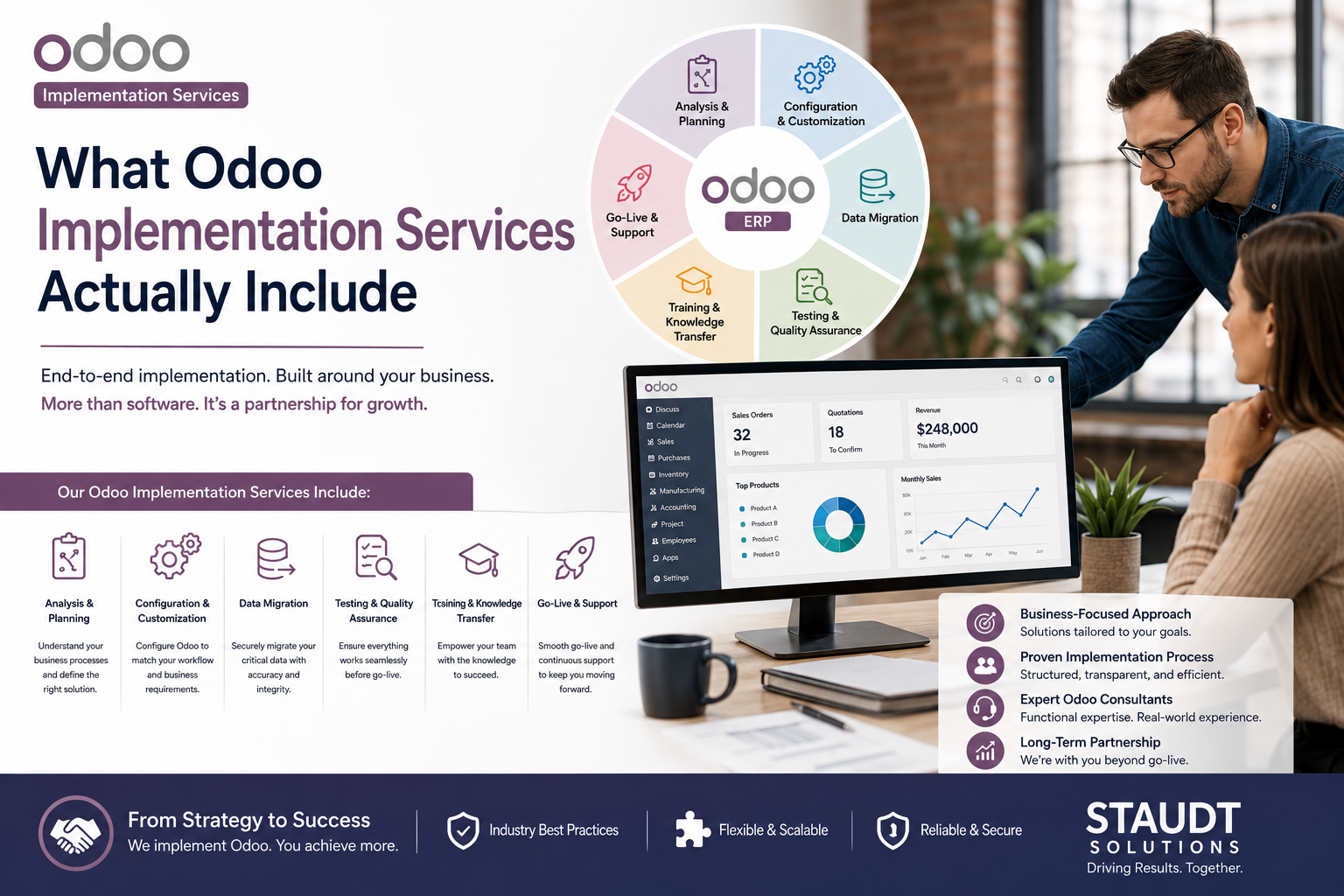
The Core Phases of a Real Implementation
- Readiness AssessmentBefore any configuration happens, a proper implementation starts with an assessment of your current state: existing systems, data quality, process maturity, and where the biggest operational risks sit. Skipping this step is the single most common reason manufacturing ERP projects go over budget — problems that should have been caught in week one instead surface in month four.
- Process MappingYour BOMs, routings, work centers, inventory logic, and approval workflows need to be documented and translated into Odoo’s structure before configuration starts. This is where a manufacturing-experienced implementer earns their fee — mapping real production complexity instead of assuming a standard workflow will fit.
- ConfigurationThis is the part most people think of as “the implementation” — setting up modules, workflows, user roles, and automations. It’s also the smallest part of a well-run project relative to the planning and testing phases around it.
- Data MigrationMoving inventory records, customer and vendor data, historical transactions, and open orders from your legacy system into Odoo. Data migration quality is one of the most underestimated risk areas — dirty data migrated into a new system just becomes dirty data in a new place, except now it’s harder to spot.
- TestingReal testing means running actual production scenarios through the new system before go-live — not just clicking through screens. This includes testing exceptions and edge cases, not just the happy path.
- TrainingTraining that happens once, right before go-live, rarely sticks. Effective training is role-specific (a shop floor operator needs different training than a purchasing manager) and reinforced after go-live, once people are using the system under real conditions.
- Go-Live SupportThe first two to four weeks after go-live are when problems surface — not because the implementation was done poorly, but because production reality always includes scenarios that didn’t come up in testing. A real implementation service stays engaged through this window rather than considering the project done at launch.
- Post-Launch OptimizationThe system that goes live on day one is rarely the system a manufacturer is still using a year later. Ongoing refinement — as your team learns the system and your processes mature — should be part of the relationship, not a separate re-engagement.
What’s Often Left Out (And Shouldn’t Be)
- Customer and vendor portal setup, if your business depends on external visibility into orders or production status
- Custom reporting, beyond Odoo’s default dashboards, built around the metrics your business actually tracks
- Change management support — helping your team adapt to new workflows, not just training them on buttons
- A clear post-go-live support structure, so “who do I call when something breaks” has an answer
Bottom Line
A manufacturer evaluating Odoo implementation services should ask for a phase-by-phase scope breakdown before signing anything — not a lump-sum quote. If a provider can’t clearly explain what happens in each phase, that’s a sign the project plan doesn’t exist yet, and you’ll be building it together after the contract is signed, on your dime.
Author Profile

- Principal Advisor | Business Systems Architect | Manufacturing & Operations | Helping Owners Replace Spreadsheets with Scalable Systems.