Signs You Need an ERP Readiness Assessment Before You Buy
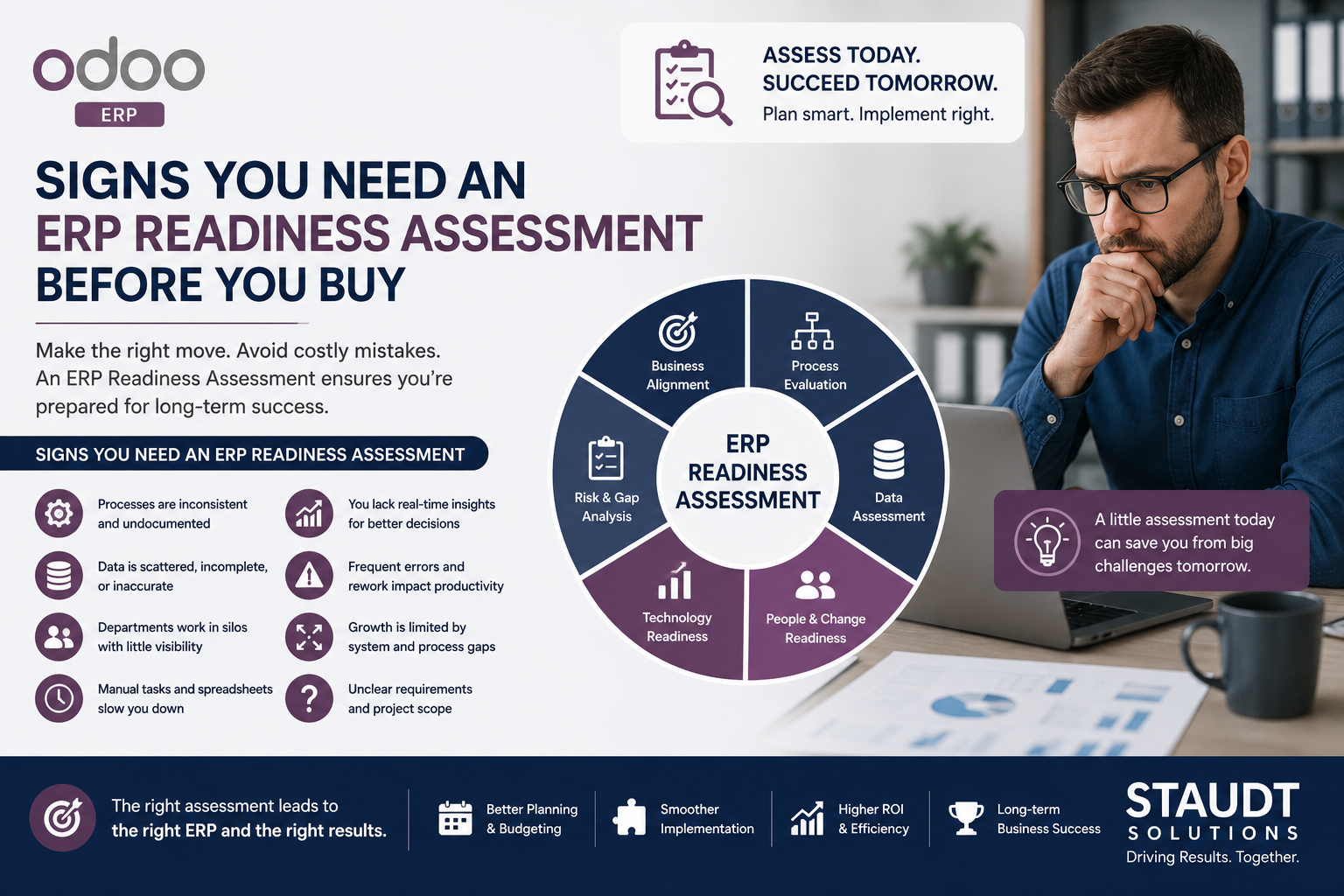
Most manufacturers evaluating a new ERP system skip straight from “we have a problem” to “let’s get a demo.” That’s the most expensive shortcut in the entire process. An ERP readiness assessment — done before you commit to any software or implementation partner — exists to catch the problems that turn a manageable project into an expensive one. Here’s how to know if you need one.
Sign 1: You’re Not Sure What’s Actually Broken
If your ERP conversation started with “our current system is old” or “we’re still using spreadsheets for half of this,” but nobody has mapped out exactly which processes are failing and why, you’re not ready to evaluate software yet. Buying a new system to fix a problem you haven’t diagnosed usually just moves the same problem into a more expensive environment.
Sign 2: Your Data Lives in Multiple Disconnected Places
Inventory in one spreadsheet, production schedules in another, and financials in a separate accounting system that doesn’t talk to either — this is one of the most common patterns in growing manufacturers, and it’s also one of the biggest hidden costs in an ERP project. Data fragmentation needs to be identified and addressed before migration, not discovered mid-implementation when it’s harder and more expensive to fix.
Sign 3: Nobody Can Agree on What “Done” Looks Like
If you asked five people on your leadership team what success looks like six months after go-live, and got five different answers, that’s a readiness gap — not a software gap. Misalignment on goals is one of the most common reasons ERP projects run over budget: scope keeps expanding because there was never a clear, shared definition of the target outcome.
Sign 4: Your Processes Exist Only as Institutional Knowledge
If your production process, approval workflows, and exception-handling live in the heads of two or three long-tenured employees rather than in documented procedures, implementing new software won’t fix that — it’ll expose it. A readiness assessment surfaces undocumented processes before they become configuration guesswork during implementation.
Sign 5: You’ve Been Burned Before
Manufacturers who’ve been through a failed or painful implementation — over budget, over timeline, or a system nobody actually uses — often go into the next attempt more cautious, but not necessarily better prepared. A readiness assessment is specifically designed to catch the root causes of a prior failure before they repeat.
What a Readiness Assessment Actually Delivers
A proper assessment should give you:
- A clear picture of your current-state processes and where the real gaps are
- An honest evaluation of your data quality and what cleanup will be required
- A realistic scope and budget range before you’re locked into a vendor quote
- Alignment among your leadership team on what success actually looks like
- A risk list — the specific things most likely to cause delays or cost overruns in your situation
Bottom Line
An ERP readiness assessment isn’t a delay tactic — it’s the step that prevents the six-figure mistakes that happen when manufacturers buy software before understanding their own problem. If any of the signs above sound familiar, that’s the conversation to have before you take a single vendor demo.
Author Profile

- Principal Advisor | Business Systems Architect | Manufacturing & Operations | Helping Owners Replace Spreadsheets with Scalable Systems.