Odoo ERP for Small Manufacturing Companies: What to Expect
Small manufacturers evaluating Odoo often fall into one of two camps: those worried it’s built for retail and services companies and won’t handle real production complexity, and those who assume any modern ERP will “just work” out of the box. Neither assumption holds up. Here’s what a small manufacturer — generally 10 to 200 employees — should actually expect from an Odoo implementation.
Odoo Can Handle Manufacturing Complexity — With the Right Configuration
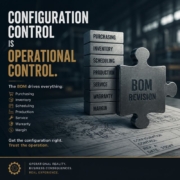
Odoo’s Manufacturing module supports multi-level bills of materials, work orders, routings, and work centers natively. It is not a watered-down system pretending to do manufacturing. But “capable of handling it” and “configured to handle it” are different things — the module has to be set up around your actual production structure, not left at default settings designed for simple assembly.
Manufacturers making component parts, running multi-stage production, or managing significant work-in-process inventory need routing and work center configuration that reflects that complexity from day one. Manufacturers running simpler, single-stage assembly need less configuration overhead — and paying for complexity you don’t need slows down user adoption without adding value.
What Changes for a Small Manufacturer Specifically
Team size means every user wears multiple hats. Unlike larger manufacturers with dedicated planners, buyers, and production schedulers, a 30-person shop often has one person doing all three. Odoo needs to be configured so that person isn’t navigating four different modules to do one job — role-based dashboards and simplified workflows matter more here than in a large enterprise rollout.
Budget constraints mean phased rollouts are common. Rather than implementing every module simultaneously, small manufacturers frequently start with core production and inventory, then add quality management, maintenance, or advanced reporting in a second phase once the foundation is stable.
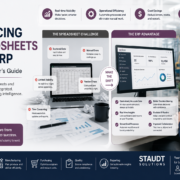
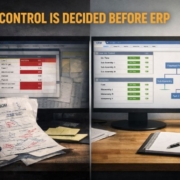
Legacy data is often messier. Small manufacturers moving off spreadsheets or an aging legacy system typically have less standardized data than larger companies with dedicated IT resources. Data cleanup before migration is not optional — it’s often the single largest time investment in the project, and skipping it guarantees problems after go-live.
What a Realistic Timeline Looks Like
For a manufacturer in the 10–200 employee range, a properly scoped Odoo implementation — from readiness assessment through go-live — typically runs 8 to 16 weeks, depending on production complexity, number of integrations (accounting, e-commerce, EDI), and how much data cleanup is required before migration. Timelines under that range are usually a sign of insufficient testing. Timelines well beyond that range often indicate scope that expanded without a corresponding budget conversation.
What Success Actually Looks Like
Success isn’t the go-live date. It’s whether, three months after go-live, your team is still using the system as designed — not building workarounds in spreadsheets because a workflow doesn’t match how production actually runs. That’s the real test of whether the implementation reflected your business or a generic template.
Bottom Line
Odoo is a legitimate manufacturing ERP for small manufacturers — but the platform’s flexibility is only an advantage if the implementation partner understands your production process well enough to configure it correctly. A small manufacturer evaluating Odoo should be less focused on whether the software can do it, and more focused on whether the implementation plan reflects how their shop actually runs.
Author Profile

- Principal Advisor | Business Systems Architect | Manufacturing & Operations | Helping Owners Replace Spreadsheets with Scalable Systems.