Odoo vs. NetSuite for Small Manufacturers
Odoo and NetSuite are two of the most common ERP platforms small and mid-size manufacturers evaluate against each other. Both are capable systems. The right choice depends less on which platform is “better” and more on which fits your company’s size, budget, and complexity — because the honest answer is that these two platforms are built for meaningfully different buyers.
Cost Structure
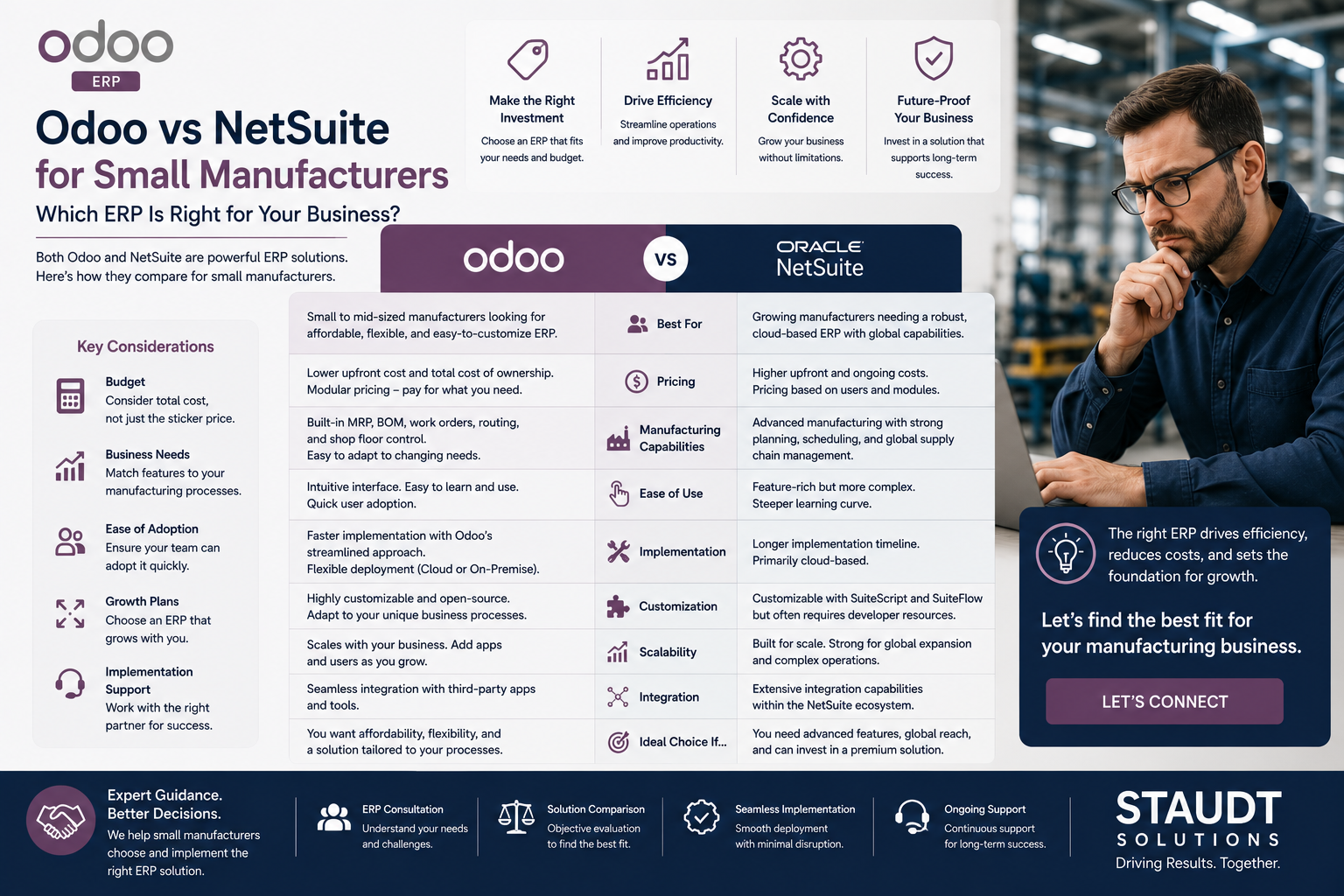
Odoo is priced modularly — you pay for the specific applications you need, and pricing scales with users and modules rather than a large fixed platform fee. This makes it accessible for manufacturers typically $8M in revenue and up who need real functionality without enterprise-level overhead.
NetSuite is priced as a full platform with a higher base cost, reflecting its positioning as an enterprise-grade system. For manufacturers with more complex, multi-entity, or multi-national operations, that cost can be justified by the scope of what’s included. For a smaller single-site manufacturer, it frequently means paying for capability that goes unused.
Implementation Complexity
Odoo implementations for small manufacturers typically run faster and lighter, particularly when scoped correctly — the modular structure allows a phased rollout starting with core production and inventory before adding complexity.
NetSuite implementations tend to be longer and more resource-intensive, which is generally proportional to the more complex requirements of the companies that need it. For a smaller manufacturer, that same implementation depth can mean more time and cost than the business actually requires.
Manufacturing Functionality
Both platforms support multi-level BOMs, work orders, and routing. The practical difference shows up in configuration depth and flexibility: Odoo’s manufacturing module is straightforward to configure for small-to-mid complexity discrete manufacturing, while NetSuite’s manufacturing capabilities go deeper for complex multi-entity or multi-warehouse operations — depth that a smaller manufacturer usually doesn’t need yet.
User Experience and Adoption
Smaller manufacturing teams — where one person often wears multiple hats — tend to adopt Odoo faster due to its more streamlined, modern interface. NetSuite’s interface reflects its enterprise roots, with more depth but a steeper learning curve, which matters more when your team doesn’t have dedicated specialists per function.
Scalability
NetSuite is built to scale into large, complex, multi-entity organizations. Odoo scales well through the small-to-mid market and increasingly into larger deployments, but manufacturers anticipating significant multi-national or multi-entity complexity in the near term should weigh that trajectory into the decision now, not after they’ve outgrown their first ERP choice.
Which Platform Fits Which Manufacturer
Odoo tends to be the stronger fit for:
- Manufacturers typically $8M in revenue and up
- Single-site or limited multi-site operations
- Companies that want to phase in functionality rather than deploy everything at once
- Budget-conscious buyers who need real manufacturing capability without enterprise pricing
NetSuite tends to be the stronger fit for:
- Larger, multi-entity, or multi-national manufacturers
- Companies with complex financial consolidation needs across subsidiaries
- Organizations with the internal resources to support a longer, more complex implementation
Bottom Line
This isn’t a “which is better” question — it’s a fit question. A manufacturer choosing based on brand recognition alone, without honestly assessing their own size and complexity, often ends up either overpaying for unused enterprise capability or underbuying into a platform they’ll outgrow in three years. Start with an honest assessment of your own operation before comparing platforms.
Author Profile

- Principal Advisor | Business Systems Architect | Manufacturing & Operations | Helping Owners Replace Spreadsheets with Scalable Systems.