Make Sure Your Business Is Ready to Replace Systems
Before You Replace Your Business System, Make Sure the Business Is Ready
I’ve heard “our system sucks” more times than I can count.
Most of the time, the system isn’t the first problem.
What leadership sees
The system feels outdated. People aren’t using it the way they should. Reports don’t line up. Everything feels harder than it should be.
So the conclusion is straightforward:
Replace the system.
What’s actually happening
BOMs aren’t accurate enough to support planning. Inventory can’t be trusted without manual checks. Teams have built workarounds just to get through the day. Processes live in people, not in the system.
The system didn’t create these problems. It exposed them.
How this plays out
I’ve seen this play out more times than I’d like to admit.
A company believes the system is holding them back. They invest in something new expecting a reset.
But the same issues follow them:
- Planning is still off
- Inventory still requires reconciliation
- People still rely on spreadsheets to get answers they don’t trust
Now they just have a more expensive version of the same problem.
Where it becomes expensive
This is where it becomes a business issue—not a system issue.
When inventory isn’t trusted → cash gets tied up or misallocated When data is inconsistent → reporting slows down or gets second-guessed When teams rely on workarounds → decisions are delayed or made with partial information
This is where companies burn money—and usually don’t realize how much.
Six figures is common. In some cases, it’s significantly more.
It’s not one bad decision. It’s hundreds of small ones compounding every month.
- Overbuying inventory “just in case”
- Expediting to cover planning misses
- Missed shipments and lost revenue
- Rework, write-offs, and manual corrections
All driven by decisions made off numbers nobody fully trusts.
Over time, it erodes confidence.
Not just in the system— but in the numbers, the process, and the decisions being made.
What good actually looks like
Core data is owned and maintained with intent. Processes are understood before they’re automated. Workarounds are treated as signals, not solutions. The system reflects how the business actually runs.
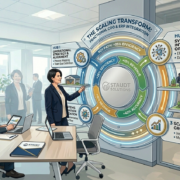
At that point, a system change can work.
Before that, it usually doesn’t.
Bottom line
Replacing the system might still be the right move.
But if the business isn’t ready, you’re not fixing the problem.
You’re just accelerating it.
This is what I’ve learned the hard way.
—Lee Stout
Staudt Solutions
Author Profile

- Principal Advisor | Business Systems Architect | Manufacturing & Operations | Helping Owners Replace Spreadsheets with Scalable Systems.